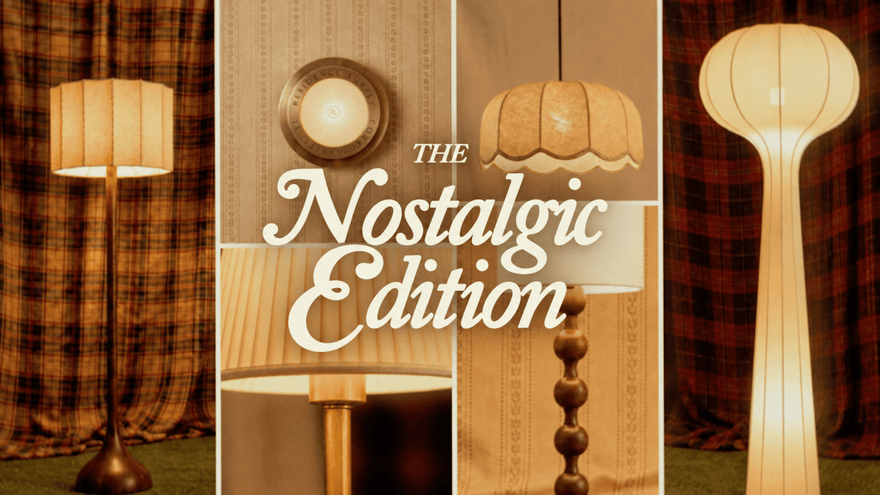
DUDD LITE was a group exhibition of more than 130 artist-designed nightlights, presented by DUDD HAUS, the Philly-based design collective, and The Future Perfect, installed through the gallery's West Village Brownstone during NYCxDesign Week 2026. The open call for the exhibit received nearly 400 submissions, with each artist having to take a nightlight and distilling their entire sensibility into something small enough to fit in a palm and humble enough that most people never think twice about it.
How 130 Artists Found 130 Different Ways to Interpret the Same Object


The premise of DUDD LITE was, at face value, deliberately modest. You have one object, one brief, nearly 400 responses, and 130 chosen artists to display their creations to an audience who're keenly prepared to be amazed by them. The materials across the show ranged from stained glass and ceramic to seashells, cotton, and wood. Among the artists on display, there were Martino Gamper, Lindsey Adelman, Rich Aybar, and Bethan Laura Wood, all names that carry weight in the collectible design world, alongside emerging voices whose work sat beside them without apology.
On the evening of the party, people waited more than thirty minutes in line on a West Village street to get inside the brownstone and take a look at the collection of works. This wasn't a retrospective of a legendary artist, nor was it a debut of someone bubbling to the top of the art world. People waited in line for something a child keeps plugged in when they're afraid of the dark, or your grandmother put in the hallway to make it easy to go to the bathroom at night, and that you never once, in your entire life, considered to be design or art.
How dope is that?
Why the Exhibition Worked Better Inside a Home Than a Gallery
The Future Perfect's West Village brownstone is a gallery that presents itself as a home, a home that's filled with things that cost a car, and tempt you with making a purchase you'd probably have to explain to your spouse. For DUDD LITE, playing up to that ambiguity became the whole point. The three floors of the brownstone represent different moods and different interpretations of the show's core proposition.
First, you have the main floor, the living room, with the nightlights integrated into a residential setting, which is to say the setting they were actually designed for. Imagine how different the experience you'd have if they were instead presented on large white blocks and under beaming track lights instead of being in a room, amongst furniture, doing exactly what they're supposed to do. Which is to exist quietly at the edges of life and cast a small, yet deliberate amount of light into a dark room.
In the basement, the show submerges guests into darkness so the nightlights themselves can prove they can function well even if beautifully designed. In the basement, the nightlights are given room to add to the atmosphere itself. Here, the objects that were merely interesting upstairs get a chance to be extraordinary. Who knew the difference between a nightlight as an object and a nightlight as an experience could be as simple as traveling down a flight of stairs and being brave enough to turn everything else off. The third floor presented a moment to exhale and take in the full experience. It's where conversations unfolded as a kind of reprieve that a week full of presentations and panels rarely permits. Appropriately, this space was also where the furniture presentation found its moment.
That instinct, layering dynamic experiences through the familiar, ran underneath every aspect of the show.
You see, the nightlight, the show argued, is not a lesser object because it is small; it's just a compressed one, and that compression isn't a limiting factor for creative expression. And 130 different artists arrived at 130 different ways of interpreting it. Some were really funny, others were formally complex, and some got really meta, provoking viewers to question why they need a light on when the rest of the house goes dark. Which, if we walk down that train of thought far enough, is really a question about fear, comfort, and what home actually means in the dead of night.
The Smallest Objects Often Leave the Biggest Impression

The show's lighting integration was made possible by Bocci's 22 System, a suite of electrical devices designed to integrate in such a way that the nightlights were embedded throughout the townhouse without interrupting the spaces they occupied. While the infrastructure was appropriately invisible, the argument made by the exhibit was not.
What DUDD HAUS understands, what made the collaboration with The Future Perfect work so well, is that an open call is like crowd sourcing creativity and granting access in an industry that can find too much comfort with elitism. The Philly collective built its reputation on platforming experimental and eccentric design practices, and DUDD LITE extended that ethos to maybe its widest audience yet. The Future Perfect, for its part, has spent two decades introducing the market to designers who go on to define their fields. Handing its townhouse over to 130 of them, established and unknown alike, was a statement about where it believes the next generation of design will emerge from and who it trusts to help tell that story.
That's the brilliance of DUDD LITE. You take an overlooked object in a house and use it to make a case for the most overlooked idea in design. The idea that work worth paying attention to does not always arrive with famous names attached or in conventional forms.
The nightlight has been in people's homes their whole life. DUDD HAUS, The Future Perfect, and 130 different artists were just needed to help us finally see it.
DUDD LITE remains on view at The Future Perfect, New York, through June 26, 2026. Photos by David Sierra, courtesy of DUDD HAUS.