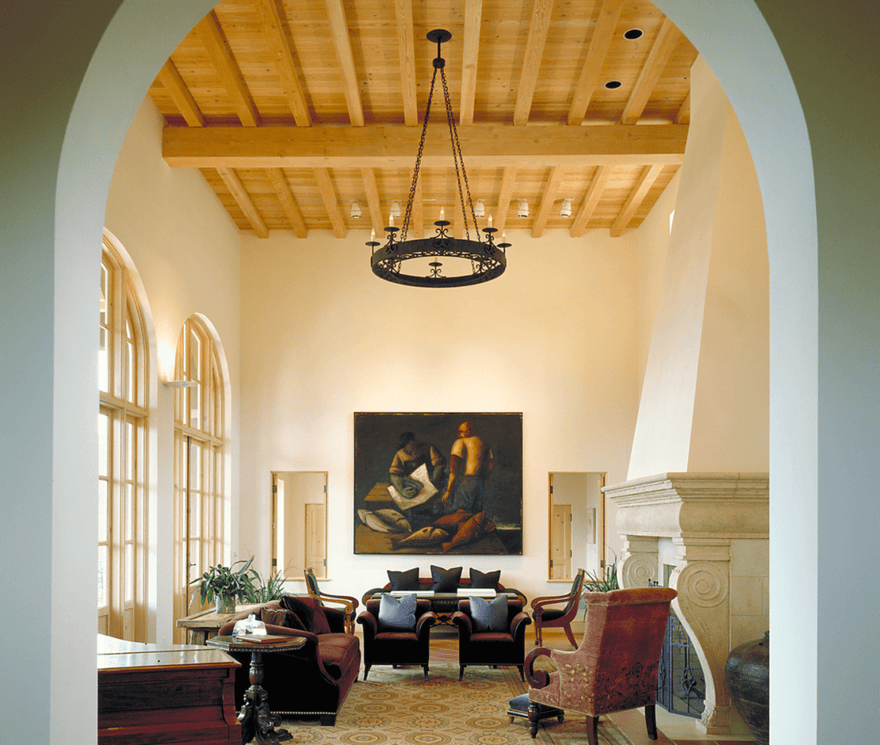
It was 83 degrees inside Brittany Been's home in Phoenix. She and her dog have been using the cool concrete as a reprieve from the heat, shout out to natural materials. Her dog is handling the heat much better than she is she says. It was an unintentionally hilarious but, in its own way, a fitting way to begin a conversation about architecture and design. We have this tendency to always refer to rooms in terms of how they look. For Been, whose work moves between private homes and hospitality spaces, she's more interested in what rooms do to us. It's not strange for her to think more about how the surface makes someone feel? When light arrives through the windows, how does that change the mood of the room? What do the objects in the room evoke within you the moment you lay eyes on them?
Her training is in architecture, with a master's degree following an undergraduate detour through microbiology. She describes herself as an "architectural designer" and treats her STEM education as a leverageable asset that allows her to approach her work with a level of rigor, organization, and thinking that seldom seems familiar to the practice. She works methodically, questions what meaning lies behind "I like your aesthetic" compliments, and establishes directions before reaching for finished samples. Maybe the most interesting thing about Been's approach is that all her rigor serves a decidedly unrigid idea that a home should be allowed to change.
"Everyone wants a house that's going to be timeless," she tells me. "And I ask them, but are you timeless?"
It's a fair question, but a daunting one. A decade ago in Miami, you might have pledged your allegiance to the white walls, black hardware, Carrara marble, and modern interpretation of luxury of the time. Today, you're more likely to belong to the more Coral Gables, Coconut Grove class of individuals who are more drawn to the old wood, worn stones, and rooms with more evidence of your personal life. Why should the place you live in be required to maintain loyalty to either version, or any version of you that may no longer exist?
Feelings Come Before Furniture

I asked Been, what her architectural training allows her to notice that someone approaching a room primarily through decoration, especially based on trends, might miss. She's careful not to place a rivalry between disciplines where they need not be. But she speaks to the need for architecture and interior design to work together for the best experiences within the home. Architecture as a discipline trains you to explore the intentions of the structure itself. What it's looking to communicate? Why are these walls placed here? What materials need to be underfoot for the inhabitants of the space? Interior design and decorating build and orchestrate feelings through objects, colors, and arrangements. So neither is better than the other, but without understanding how they do what they do, you may miss the opportunity to make the most of your space.
Think about an amazing restaurant. Somewhere you'd go for a date with someone you want to make a great impression on but don't want to come across as trying too hard. Somewhere where you can have a great conversation, enjoy amazing food, and feel comforted in the atmosphere. It can create a dark, theatrical atmosphere with custom lighting, a focused palette, and unique fine details that make the place feel like a signature in and of itself. However, in a home, it would be borderline impossible for her to take the same approach. A house has its own way of doing things. Its orientation, existing vegetation, and the vision for the everyday routines of those who will call it home all factor into that space. You can't just import the approach to your favorite date spot into your home itself and expect it to behave the same way over your kitchen counter as it did in the corner booth.
"Restaurants, think about the moodiest place you can go where you need your spotlight to look at a menu," says Been. In a house, "you need it to be able to function."
The lesson isn't to abandon the mood you feel in love with at your favorite date space. She's used the same light for both residential and hospitality projects before. The idea here is to consider, before making a purchase, what the fixture is being asked to do in your home that maybe it wasn't asked to do there. Atmosphere without use can be a fun trick on the first visit for guests, but it can be a room that's never used when it's just you and the family at home.
The Playbook Model, Not a Shopping List

One of the most common requests people have for Been is to teach them how to make their home more "interior designed." When they make this request, more often than not, their challenges are the fruit of the same or similar predicaments. It's what she calls the domino effect. "You buy one item and then you buy another item that doesn't match the first item. Now you're stuck and you succumb to the urge to buy a third item to fix the problem with the first two items. Her solution is to approach interior design with a playbook in mind rather than fixating on a specific item. Have an agreed-upon understanding of the mood, materials, and palette you want before you begin purchasing anything. With clients, she starts with a mood board and asks what they actually mean when they say they love very abstract things like "the vibe" or "the aesthetic." It's wise. Two people can save the same image from Twitter and upload it to whatever mood board they're working on, and do so for two entirely different reasons.
Another take for Been is the importance of your floor, a part of the home we overlook pretty casually. The floor, she believes, is often one of the most consequential decisions you can make for the home because it has such a commanding effect on the temperature of everything else that follows. A cool gray surface and a warm wood floor invite different material conversations than a cool gray surface and a floor that's linoleum. "When finishes differ slightly but remain in conversation, a home begins to feel collected," says Been with charming laughter. She enjoys mixing materials. Maybe a little oil-rubbed bronze with a touch of vintage brass, or different silver-toned finishes across rooms. For someone who had to make these decisions alone, however, her advice is to keep the metal combinations simple until you have a better grip on what holds them together. Variety needs an eye for relationship and not just the appetite for variety itself.
The Final Touch, Changing the Light Switch

A small ritual Been developed at the end of her residential projects has been the inclusion of different light switches to replace the plastic ones that usually come with the home. Most clients, she says, don't even realize their light switches and plates can be or should be a design decision. She sometimes changes them as a gift for them to discover after the project has been finished. In one office, she'd covered the room in a dark, ripe olive, including the trim. For this, she used brass light switches. Not because every switch out to announce itself. "I don't like when decor is performative," she tells me. "I like when it's a soft compliment." She imagines stainless steel switch plates against an emerald marble kitchen backsplash, or a Rosso Levanto plate in a room where burgundy already appears elsewhere. The idea is not to build a shrine to the hardware, but to ensure that everything you touch every day participates in the larger thoughts and considerations of the room. The same can be said about curtain tiebacks, cabinet pulls, door handles, grout, and whatever minor objects you've collected to adorn the coffee table.
In hospitality projects, the details often miss the register of the patron. It doesn't miss her though. Whenever she walks into another designer's restaurant, she sometimes has a private tip of the hat as a way of saying, "I see you."
When I asked if she's Team Patina or Team Perfection, Been didn't hesitate to say "Team Patina!" She loves living materials that are free to change and transform through use. She loves the little dents and signs of age that make an object harder to mistake for something straight out of a showroom or catalog. It's one reason she understands the appeal of the Nancy Meyers kitchen, the cottage-like home, and the return to more richly furnished rooms. The longing isn't necessarily for a specific sofa, or lamp, or floral fabric. It's for the impression that somebody made choices over time and lived with them long enough for those choices to mean something. "It just takes more intentionality and time."

For Brittany Been, the antidote to the endless feed is to travel, and more broadly, to be physically present in front of interesting buildings. She cites the Barcelona Pavilion by Mies van der Rohe as being one thing when you watch it in a reel and something else entirely in person, where the proportions and materials become legible and can call to you. In Arizona, there's Al Beadle's Three Fountains in Phoenix, and Been's admiration for architect Frida Escobedo, which both speak to the way material and strong color can become the architecture. It's all about sharpening our observation skills. Instead of relying on saving images and asking where to buy the product, it's worth thinking about why a room captivates us in the first place. Those kinds of questions teach you how to recognize the feelings, what provokes them, and doing so before buying something is a great way to save yourself the headache, and to avoid wasting cash.
At the end of our conversations, as I do with each interview, I asked Brittany Been to give you guys a homework assignment.
I hope you're actually doing these.
Been's assignment is to walk through our homes and identify the pieces we love the most, then ask ourselves why we love them. The first answer, "I like the way it looks" isn't going to cut it, even though it's the one we may feel safest relying on. You have to dig deeper. It's a deceptively demanding assignment so don't be caught off-guard.
This interview with architectural designer Brittany Been explores her approach to residential and hospitality design, the relationship between architecture and interior design, and why a home should evolve alongside the people who inhabit it. Select images featured in this article are sourced from Brittany Been's website and remain the intellectual property of their respective photographers and copyright holders. Residence Supply does not own, nor does it claim ownership of, any third-party imagery featured in this story. All such imagery is presented for editorial reference and commentary.