Table of Contents
Kitchen Lighting Design: How to Light a Kitchen (Exact Heights, Spacing, and Lumens)

Megan Reed |
Understanding the Three Essential Lighting Layers
Professional kitchen lighting design is built on three distinct layers, each serving a specific purpose. The magic happens when all three work together seamlessly.
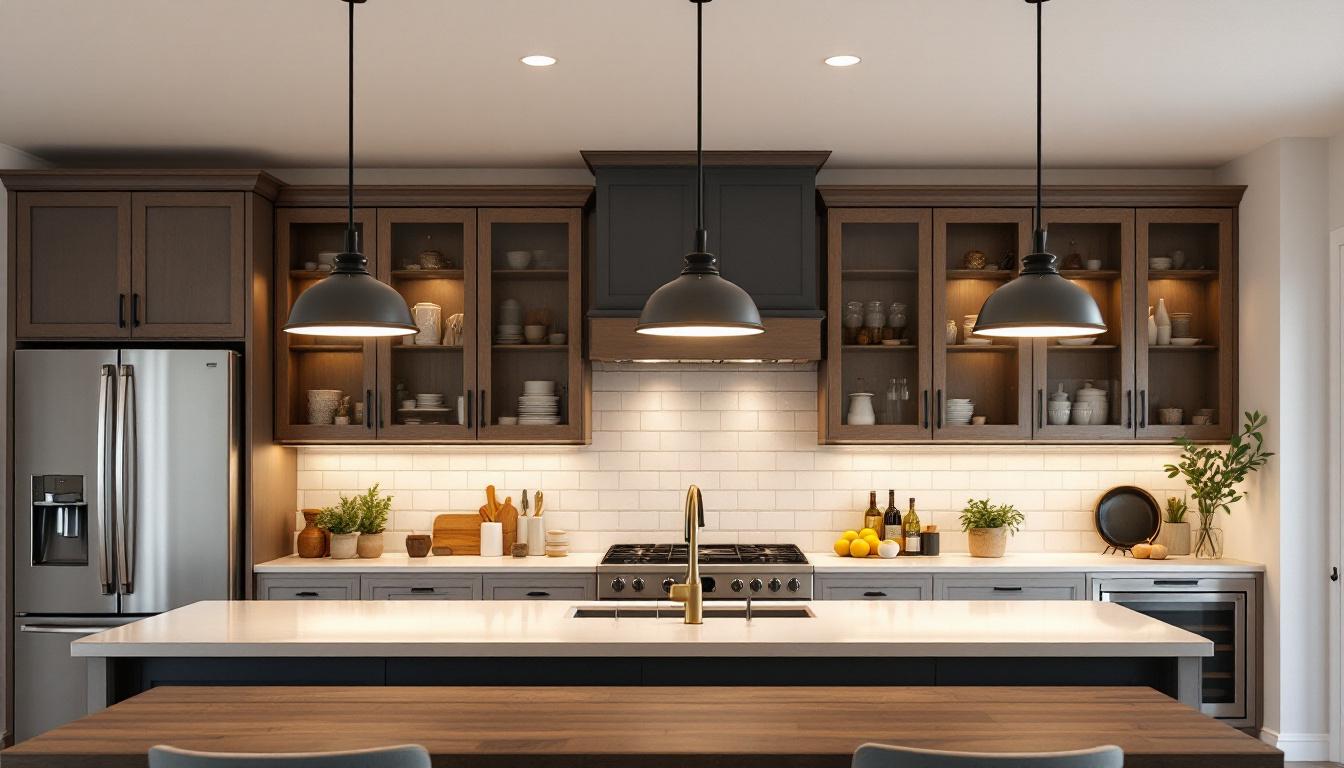
Layer 1: Ambient (General) Lighting - The Foundation
Ambient lighting is your kitchen's main source of light. It fills the room with a soft glow, making it comfortable to navigate and enjoy. Think of it as the base layer that sets the tone for everything else. The right ambient lighting can transform a kitchen from a purely functional area into a warm and inviting space for family gatherings and entertaining guests.
- Kitchen Ceiling Fixtures: A central chandelier or a series of pendant lights can create a stunning focal point while providing ample illumination. Choosing fixtures that complement your kitchen's style—whether modern, rustic, or traditional—can enhance the overall aesthetic.
- Recessed Lighting: Installed in the ceiling, these fixtures offer a clean, modern look and can be strategically placed to light up dark corners. They can also be dimmable, allowing you to adjust the brightness based on the time of day or the mood you wish to create.
Layer 2: Task Lighting - Where Work Happens
Task lighting is all about practicality. It’s the focused light that helps you perform specific activities, like cooking or prepping meals. This layer is crucial for safety and efficiency, ensuring that you can see what you’re doing without straining your eyes. Proper task lighting can also make cooking a more enjoyable experience, as it allows you to focus on the details of your culinary creations.
- Under-Cabinet Lights: These are a game-changer. They illuminate countertops, making it easier to see what you’re doing while adding a sleek touch to your cabinetry. LED strip lights are a popular choice here, as they are energy-efficient and can be easily installed.
- Wall Sconces: Placed near workstations, sconces can provide additional light where you need it most, like over a kitchen island or a prep area. They come in various styles and finishes, allowing you to match them with your kitchen decor while enhancing functionality.
Layer 3: Accent Lighting - Adding Depth and Drama
Accent lighting adds depth and personality to your kitchen. It highlights architectural features, artwork, or decorative elements, creating visual interest and warmth. This type of lighting is essential for showcasing your personal style and making the kitchen feel like a true reflection of your taste.
- Track Lighting: This versatile option allows you to direct light exactly where you want it, perfect for showcasing a beautiful backsplash or artwork. With adjustable heads, track lighting can be repositioned as your decor changes, providing flexibility in your design.
- Glass-Front Cabinets: Installing lights inside these cabinets can create a stunning display for your dishware or collectibles. This not only enhances the aesthetic appeal but also makes it easier to find items, adding both beauty and functionality to your kitchen.
In addition to these lighting layers, consider the color temperature of your bulbs. Warmer tones can create a cozy atmosphere, while cooler tones may enhance focus and alertness, making them suitable for task areas. Furthermore, integrating smart lighting solutions can offer convenience and control, allowing you to adjust the brightness and color of your lights with a simple voice command or through an app. This modern approach to kitchen lighting can elevate your cooking experience and make your kitchen a more enjoyable place to spend time.
How Many Lights Does Your Kitchen Actually Need?
Calculating Your Kitchen's Lighting Requirements
The Professional Formula
Step 1: Calculate total lumens needed
- Measure your kitchen (length × width = square footage)
- Multiply by 70-80 lumens per square foot
- Result = total lumens required across all sources
Step 2: Allocate lumens by layer
- Ambient lighting: 50-60% of total
- Task lighting: 30-40% of total
- Accent lighting: 5-15% of total
Step 3: Determine fixture count
- Divide ambient lumens by lumens-per-fixture
- Result = number of recessed lights needed
Real Kitchen Examples
1. Small kitchen (10' × 10' = 100 sq ft)
- Total lumens needed: 7,000-8,000
- Ambient: 4,200 lumens ÷ 800 per fixture = 6 recessed lights
- Task: 8 feet under-cabinet LED @ 400 lumens/ft = 3,200 lumens
- Accent: 1 pendant over small table = 600 lumens
- Total fixtures: 6 recessed + under-cabinet + 1 pendant
2. Medium kitchen (12' × 15' = 180 sq ft)
- Total lumens needed: 12,600-14,400
- Ambient: 8,400 lumens ÷ 900 per fixture = 10 recessed lights
- Task: 16 feet under-cabinet LED @ 450 lumens/ft = 7,200 lumens
- Task: 3 island pendants @ 1,000 lumens each = 3,000 lumens
- Accent: Cabinet + toe-kick lighting = 400 lumens
- Total fixtures: 10 recessed + under-cabinet + 3 pendants + accent
3. Large kitchen (15' × 20' = 300 sq ft)
- Total lumens needed: 21,000-24,000
- Ambient: 13,500 lumens ÷ 900 per fixture = 15 recessed lights
- Task: 24 feet under-cabinet LED @ 450 lumens/ft = 10,800 lumens
- Task: 4 island pendants @ 1,000 lumens each = 4,000 lumens
- Accent: Multiple cabinet + cove + toe-kick = 800 lumens
- Total fixtures: 15 recessed + under-cabinet + 4 pendants + accent package

Quick Reference Table
| Kitchen Size | Square Feet | Recessed Lights | Under-Cabinet (linear ft) | Island Pendants |
|---|---|---|---|---|
| Small | 80-120 | 6-8 | 6-10 feet | 1-2 |
| Medium | 120-180 | 9-12 | 12-18 feet | 2-3 |
| Large | 180-250 | 13-17 | 18-28 feet | 3-4 |
| Great room | 250-400 | 18-25 | 25-40 feet | 4-6 |
Choosing the Right Fixtures
This section covers three essential lighting layers for kitchens, with specific technical requirements and cost considerations for each.
Recessed Lighting Essentials
Use 4-inch LED integrated fixtures (not 6-inch) with 800-1,000 lumens, 2700-3000K color temperature, and 90+ CRI for accurate food colors. Place them 24-30 inches from walls with upper cabinets, 18-24 inches from walls without cabinets, and avoid positioning directly in front of cabinet doors to prevent shadows. Costs range from $15-30 DIY to $100-150 for premium smart fixtures installed.

Under-Cabinet Lighting Options
LED strip lights are recommended for 90% of installations due to even coverage, thin profile, and DIY-friendliness. Specify 350-500 lumens per foot with 120+ LEDs per foot, mounted in aluminum channels with frosted diffusers 2-4 inches from cabinet front edge. Costs: $20-45/foot DIY or $60-120/foot installed. Linear bars ($80-200/foot) offer premium appearance, while puck lights ($15-35 each) work for budget installations but create uneven light pools.

Pendant Lighting Guidelines
When choosing kitchen island pendant lights, size pendants at 1/2 to 2/3 of island width for a single fixture, or 1/4 to 1/3 of the island width each for multiple pendants. Hang them 30–36 inches above countertops, with at least 24–30 inches between fixture centers. Task-focused pendants need 800–1,200 lumens each (2,400–3,600 total for a 7-foot island), while decorative pendants can provide 200–400 lumens. Opaque shades direct light downward for task work, while translucent shades provide ambient lighting.

Mastering Color Temperature for Kitchen Lighting
The color temperature of your bulbs can significantly affect the ambiance of your kitchen. It’s essential to choose the right hue to create the desired atmosphere.

Color Temperature Spectrum Comparison
| Temperature | Name | Feel | Best For | Enhances | Consider For | Notes |
|---|---|---|---|---|---|---|
| 2700K | Warm White | Cozy, intimate, residential | Dining areas, evening ambiance | Warm wood tones, brass, copper | Pendant lights, accent lighting | Can make white cabinets look slightly yellow |
| 3000K | Soft White | Welcoming yet functional | General kitchen use, all-day lighting | Most materials and finishes | Recessed lights, under-cabinet, all fixtures | Industry standard for residential kitchens (MOST VERSATILE) |
| 3500K | Neutral White | Clean, modern, bright | Contemporary kitchens, detailed food prep | White, gray, stainless steel | Task-focused areas only | Can feel institutional if overused |
| 4000K+ | Cool White | Clinical, commercial, sterile | Garages, workshops, commercial kitchens | — | Pantry lighting (label accuracy) | Avoid in residential kitchens—makes food look unappetizing |
The 300K Rule: Color Temperature Combinations
Critical Principle: Keep visible light sources within 300 Kelvins of each other.
| Combination | Status | Notes |
|---|---|---|
| 2700K pendants + 3000K recessed + 2700K under-cabinet | ✓ Good | Within 300K range |
| 3000K throughout | ✓ Good | Consistent, seamless look |
| 3000K recessed + 3500K task lighting | ✓ Good | Works well for modern styles |
| 2700K pendants + 4000K recessed | ✗ Bad | Jarring contrast (1300K difference) |
| 3000K mixed with 5000K | ✗ Bad | Looks cheap and poorly planned |
Tunable White LED Schedule
| Time of Day | Recommended Temperature | Purpose |
|---|---|---|
| Morning | 3500K | Alertness during meal prep |
| Afternoon | 3000K | Balanced, functional light |
| Evening | 2700K | Relaxed dining atmosphere |
| Night | 2200K | Minimal sleep disruption |
Cost Premium: 40-60% more than fixed-temperature fixtures
Color Rendering Index (CRI) Guide
| CRI Range | Quality Level | Recommendation | Notes |
|---|---|---|---|
| 80-85 | Minimum Acceptable | Budget fixtures only | Basic color accuracy |
| 90-95 | Recommended | Ideal for kitchens | Shows food colors accurately |
| 95+ | Premium | Exceptional quality | Best color accuracy available |
Why it matters in kitchens:
- Low CRI makes food look unappetizing
- Affects ability to judge produce ripeness
- Impacts how cabinet colors and finishes appear
- Can't be changed—must buy high-CRI fixtures from start
Zone-by-Zone Lighting Strategy

| Zone | Primary Goal | Recommended Fixtures | Positioning & Layout Rules | Key Specs & Notes |
|
1. Cooking (Range/Cooktop) |
Illuminate pots without shadows. |
1. Integrated Hood Light 2. Recessed Lights (2-3) |
Do: Place recessed lights in an arc 30–40" in front of range. Don't: Place directly above (creates shadows). |
Hood: 400-600 lumens. Target: 75-100 foot-candles on surface. |
|
2. Prep (Counters) |
Shadow-free task lighting. |
1. Under-cabinet LED Strips 2. Recessed Lights |
Strip: Continuous (cover 90% of cabinet length). Recessed: 24–30" from wall (or 12–18" if no upper cabinets). |
Brightness: 400-500 lumens per foot. No Uppers: Increase recessed count by 40%. |
|
3. Island (Multi-use) |
Task lighting + Style. |
1. Pendants 2. Recessed (supplemental) |
Height: 34–36" above counter. Spacing: Equal spacing (24–30" apart). |
2 Pendants: Space 1/3 from each end. 3 Pendants: Place at 1/4 and 3/4 points. |
| 4. Sink | Visibility for cleaning. |
1. Recessed Light 2. Pendant |
Standard: Centered 24–30" from wall. Wide Sinks (36"+): 2 lights spaced 18–24" apart. |
Deep sinks may need higher lumen fixtures (1000+) or forward positioning. |
| 5. Pantry | Efficiency & Label reading. |
1. Motion-Sensor LED 2. Flush Mount |
Placement: Ceiling center or LED strips on shelves. |
Temp: Cool white (3500-4000K) is acceptable here. Brightness: 20-30 lumens/sq ft. |
|
6. Cleanup (Dishwasher) |
Specific task visibility. |
1. Overhead Recessed 2. Under-counter LED |
Ensure dedicated light above dishwasher door area. | Consider LED strips inside trash/recycling cabinet. |
| 7. Dining | Ambiance & Separation. | 1. Chandelier/Large Pendant |
Height: 30–34" above table. Size: Fixture width should be 1/2 to 2/3 of table width. |
Critical: Must be on a separate dimmer switch from kitchen task lights. |
Kitchen Lighting by Style

While technical lighting standards remain constant, fixture design is what defines your kitchen's personality. Check architectural styles with their ideal fixture types, finishes, and color temperatures to ensure your lighting enhances the overall aesthetic.
Contemporary/Modern
-
Fixtures: Square-trim recessed lights, geometric or linear pendants, integrated LED strips.
-
Finishes: Chrome, matte black, or other metallics.
-
Light Temperature: Cooler (3000-3500K) for a clean, sharp atmosphere.
Traditional
-
Fixtures: Round-trim recessed lights, lantern pendants, mini chandeliers.
-
Finishes: Brass, bronze, or other warm metals.
-
Light Temperature: Warmer (2700-3000K) to complement wood and detailed elements.
Transitional
-
Fixtures: Standard recessed lights, drum or globe pendants.
-
Finishes: Mixed metals for balance.
-
Light Temperature: Neutral and inviting (2700-3000K).
Industrial
-
Fixtures: Black recessed trims, wire cage pendants, Edison-style bulbs.
-
Finishes: Aged metals or matte black.
-
Light Temperature: Functional, white light (3000-3500K).
Minimalist/Scandinavian
-
Fixtures: Trimless recessed lighting, simple glass pendants (often in white or natural materials).
-
Finishes: Clean, natural.
-
Light Temperature: Bright, cool light (3000-4000K) to create an airy, open feel.
Universal Rule
While the look of the fixture is style-dependent, the primary goal is always to ensure the space has the right lighting levels and distribution, supporting both function and atmosphere.
By aligning the fixture design with your kitchen’s style, you can create a space where the lighting complements the overall aesthetic while fulfilling its functional needs.
Common Kitchen Lighting Mistakes
Kitchen Lighting Mistakes and How to Avoid Them
-
Insufficient Overall Lighting – Ensure at least 70-80 lumens per square foot to avoid a dark, cramped kitchen.
-
Recessed Lights Too Close to Cabinets – Position lights 24-30 inches from the wall to prevent countertop shadows.
-
Under-Cabinet Lights Against the Wall – Mount lights 2-4 inches from the cabinet’s front edge to properly illuminate the counter.
-
No Dimmer Switches – Install dimmer switches for flexible lighting control, ideally with smart dimmers for added functionality.
-
Mixing Color Temperatures – Keep all lighting fixtures within a 300K range to avoid mismatched lighting.
-
Single-Layer Lighting – Use at least three layers (ambient, task, and accent) to avoid flat, shadow-filled spaces.
-
Forgetting Sink Lighting – Install a dedicated light above the sink for safe and efficient use.
-
Wrong Pendant Size or Height – Follow proper sizing and hanging guidelines for a balanced look and adequate lighting.
-
Cheap, Non-Dimmable LEDs – Choose high-quality, dimmable LEDs with a CRI of 90+ for better performance and longevity.
-
Inadequate Planning for Cabinet Layout – Finalize the cabinet design before electrical rough-in to avoid costly lighting adjustments.
These tips will help ensure your kitchen lighting is both functional and aesthetically pleasing.
Conclusion: Creating Your Perfect Kitchen Oasis
Lighting is an essential aspect of any kitchen design, especially in a modern farmhouse setting where warmth and functionality are paramount. By understanding the different layers of lighting, choosing the right fixtures, and personalizing your space, you can create a kitchen that not only looks stunning but also feels inviting and practical.
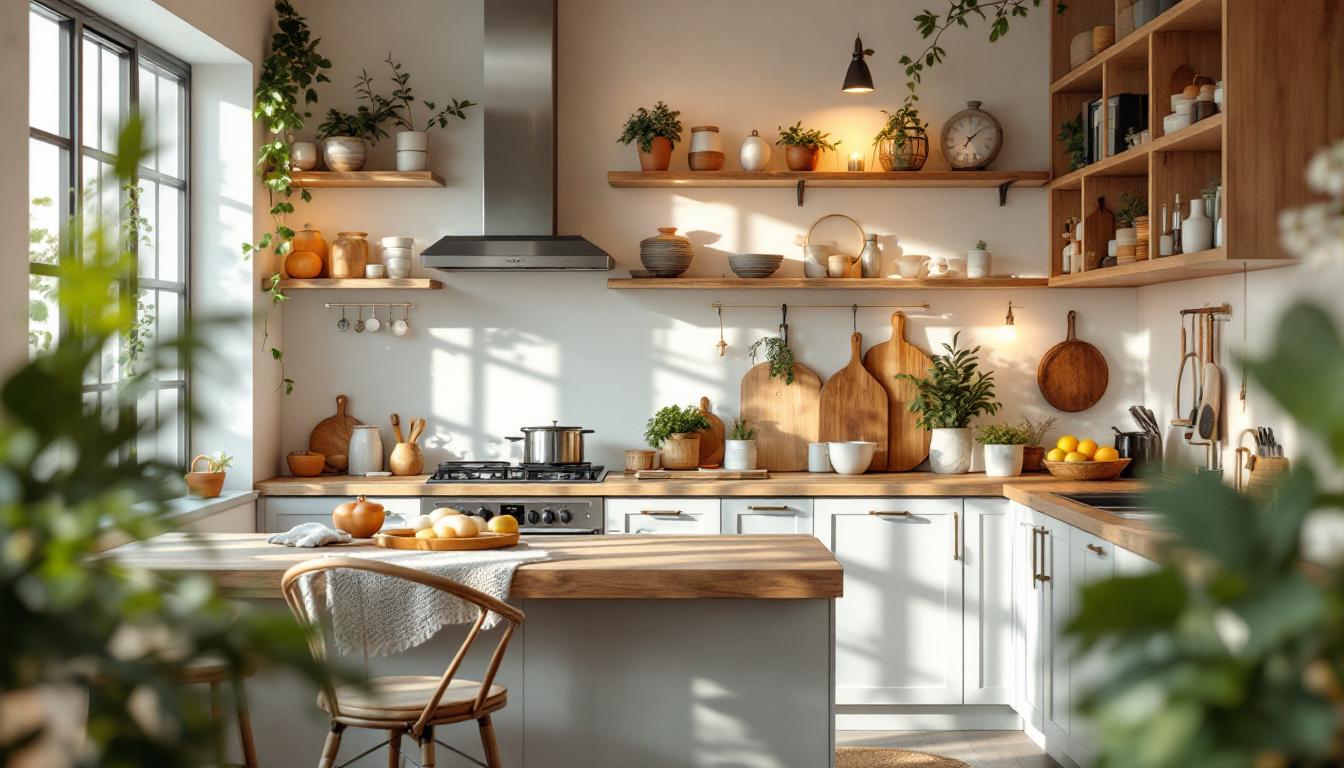
So, whether you’re cooking up a storm or enjoying a quiet cup of coffee, your kitchen should be a place that feels just right. With these expert tips and ideas, you’re well on your way to achieving that perfect balance of light, style, and comfort.