The term "ambient" derives from the Latin ambire, meaning "to go around" or "surround," and that's exactly what it does. Ambient lighting is the foundation of your lighting plan. It’s the general, overall illumination that allows you to navigate a room safely, comfortably, and in confidence. It literally is your baseline layer that fills a space with light, eliminating harsh shadows and providing enough visibility for everyday activities without calling attention to itself. When done well, you don't notice it. You just feel more comfortable in the room.
In professional lighting design, ambient lighting is the first of three essential types of lighting, alongside task lighting and accent lighting. Without it, even the most dramatic task and accent lighting falls flat because it has no foundation to stand on in a living space.
How Ambient Lighting Evolved From Firelight to Modern Illumination
For most of human history, ambient light meant fire. Open flames in hearths, oil lamps, candles clustered in chandeliers, all to provide general illumination by necessity rather than design. Because we needed enough light to move safely and see faces across a room, smoke, flicker, and inconsistent brightness were accepted as unavoidable.
By the early 1800s, gas lighting represented the first shift toward a more controlled solution. Gas fixtures could be adjusted with valves, allowing us to adjust brightness, and by the 1850s, gas lighting became standard in affluent urban homes, providing more reliable ambient light than candles or oil. In 1879 everything was revolutionized by Thomas Edison's commercially viable incandescent bulb. Electric light was cleaner, safer, and more consistent than any previous source. For the first time, ambient light could be both abundant and unobtrusive. LED technology, mainstream by the 2010s, fundamentally changed ambient lighting possibilities. LED lighting efficiency and small size variants enabled fixtures that disappear entirely into architecture.
The evolution is a consistent trajectory from accepting whatever light sources provided to demanding precise control over intensity, color, and distribution.
Understanding the Three-Layer Lighting Model in Interior Lighting Design
Ambient Lighting: This is the general illumination that fills the room. Sources can include overhead fixtures, chandeliers, pendant lights, wall sconces, and natural light from windows. The goal is even distribution without creating glare or harsh shadows.
Task Lighting: Focused light for specific activities (the task part), reading lamps beside a bed, under-cabinet lights in kitchens, desk lamps in home offices. Typically, this is brighter and more of a spotlight than ambient light, and it is concentrated where work happens.
Accent Lighting: Directional light used to highlight specific objects, artwork, architectural features, or create visual interest. Usually, this light is three times brighter than ambient light to create noticeable contrast; think of track lighting on paintings, or picture lights above frames.
These three layers work together to create depth, functionality, and make up mood lighting. If you only have ambient lighting, you’ll only produce flat and uninspiring spaces. Task lighting alone creates pools of brightness in otherwise dark rooms. Accent lighting without an ambient foundation feels too theatrical and uncomfortable. But layered lighting combined strategically, they create environments that function well and feel inviting.
Why Ambient Lighting Needs Task and Accent Lighting to Succeed
Spaces lit solely with ambient sources feel flat and uninspiring, regardless of how well-distributed the light. Restaurants, hotels, and residences that rely only on overhead ambient lighting lack depth and visual interest. The solution isn't adding more ambient lighting though.
Common ambient-only mistakes:
- Over-reliance on recessed lighting throughout home creates the cave effect.
- Single overhead fixture in living rooms are flat and uninviting.
- Bright ambient light without the ability to adjust and shape the atmosphere.
- Ambient light without accent lighting to highlight areas or objects of interest.
Use ambient lighting as the foundation but add task lighting where activities happen and accent lighting to create focal points and depth.
How Color Temperature and Hue Influence Ambiance
The color temperature of ambient lighting will dramatically affect how spaces feel:
- Warm White (2700-3000K): Yellowish-white light similar to incandescent bulbs which creates a cozy, warmer light. This is common in residential living rooms, bedrooms, dining rooms and makes skin tones appear warm and lively.
- Neutral White (3500-4100K): Crisp white light; often used in kitchens, bathrooms, home offices where color accuracy matters. Feels clean and modern without being cold.
- Cool White (5000-6500K): Bluish-white light resembling daylight; often used to increase alertness, makes rooms feel larger, and cleaner. This is common in commercial settings but can feel harsh and make people anxious in residential spaces.
How to Use Ambient Lighting in Home Decor
Living Rooms: Ambient lighting sets the foundation for relaxation and conversations when thought out. Dimmers are essential for shaping ambiance here.
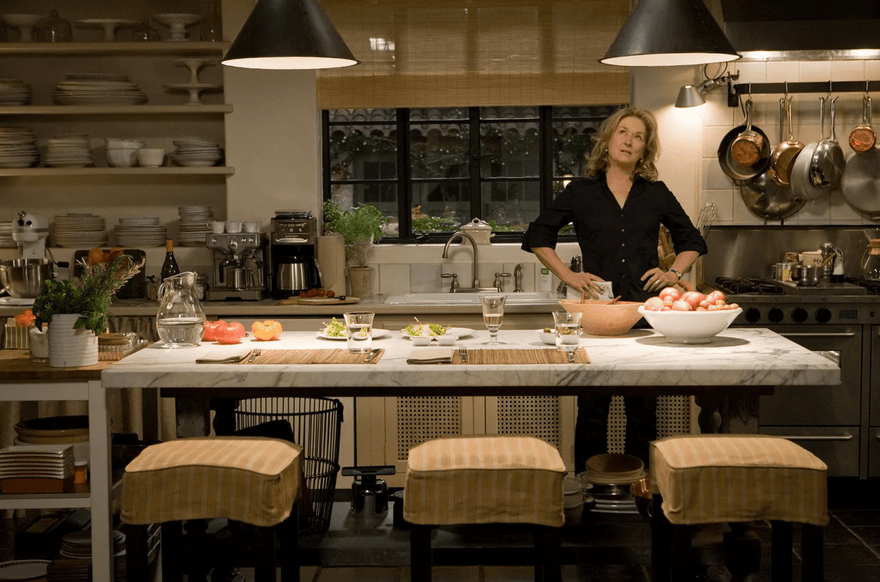
Kitchens: Require higher ambient light levels due to safety considerations and task demands. Recessed lighting is common but insufficient alone; combine it with pendant lights over islands, under-cabinet task lighting, and natural light from windows. Even ambient distribution is the goal.
Bedrooms: Lower ambient light levels create a restful atmosphere so flexibility is ideal; ceiling fixtures with dimmers, wall sconces, or multiple lamps deliver best. Ambient light should allow safe navigation but not feel stimulating before sleep.
Bathrooms: Ceiling fixtures provide a strong base layer, but when supplemented by sconces flanking mirrors, even though it’s technically task lighting, it contributes to overall ambient quality.
Dining Rooms: Pendant lights or chandeliers centered over tables provide perfect ambient illumination. Dimmers are critical to account for every situational need, and supplemental sconces can add ambient layers if room is large or a single fixture is insufficient.
Key Design Considerations for Effective Ambient Lighting
- Higher ceilings require more powerful ambient sources or additional fixtures to achieve adequate light levels.
- Every foot of ceiling height above eight feet requires approximately 10% more light output to maintain comfortable ambient levels.
- Larger rooms need multiple ambient sources for even distribution.
- Long, narrow rooms benefit from evenly spaced fixtures along their length. Avoid placing ambient fixtures too close to walls.
- All ambient lighting should be dimmable. Dimmers provide flexibility without requiring multiple fixtures or light sources.
Why Ambient Lighting Is Essential for Lighting Your Home
Ambient lighting is the infrastructure to a space that feels lived in. It's the baseline that makes everything else possible, the ability to move through a space safely, to see faces clearly during conversation, or to perform activities without eye strain. When done poorly, spaces feel uncomfortable even if you can't articulate why. When done well, you don't notice the lighting, you just notice you don’t want to leave the room you’re in. It's the invisible yet essential foundation that allows both function and atmosphere to coexist.