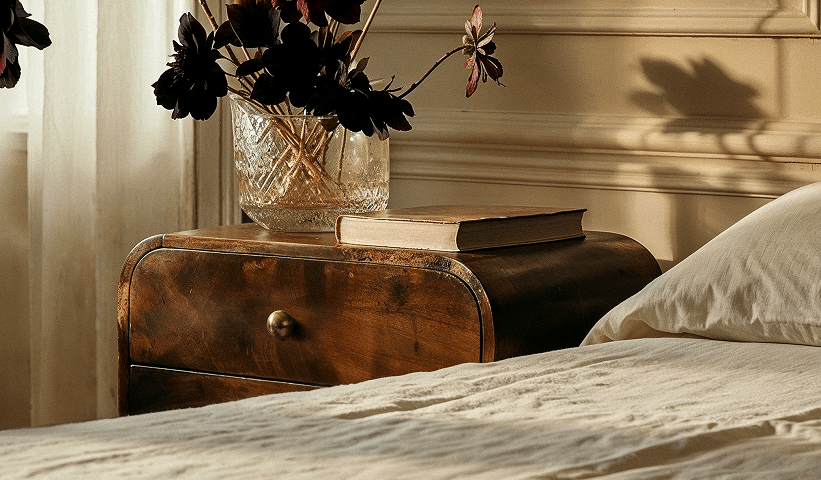
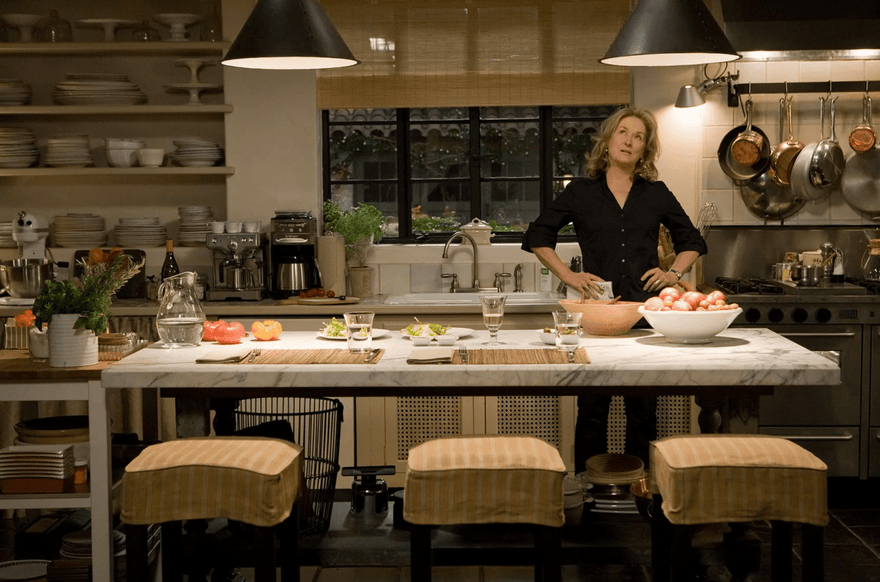
We used to be needed by our homes. Today, by the time you reach the front door, you can just unlock it with a Bluetooth app. You can use a Google Nest for your thermostat and adjust the temperature of the house with a few taps on your phone. Your shades can lower and raise themselves, and your coffee can be freshly brewed for you the next morning without you ever getting out of bed. Our modern homes have become optimized to anticipate desire and require the least amount of input from us. As cool as that is, it's the perfect anticipation and maximizing efficiency that can ruin the pleasure in the entire experience of being at home.
There are domestic acts whose inefficiency is their entire shtick; it's like grilling the perfect steak. Walking up to the lamp and turning it on in the evening, using the cafetera to make your espresso in the morning, drawing a nice bath; these gestures survive despite the fact that there are much more convenient and faster alternatives.
The Difference Between a Habit and a Ritual
Psychologists distinguish between these two camps by purpose. Habits are efficiency-driven, with very clear goals and outcomes attached to them. You build a habit so you no longer have to pay attention to the act itself. You wake up, you brush your teeth, you take a shower, you get ready for the day. Habits are all about economizing attention. Habits want to disappear into the background of the day. You look back, and you can't really recall if you've brushed your teeth the exact same way or showered the exact same way, because those things don't really matter. The outcome was achieved.
Rituals are the polar opposites. What you do matters, how you do it matters, and the outcomes are only validated if the process is the same. Rituals have form, sequences, repetition, and meaning that trump their results. Researchers on rituals describe actions that have no definitive purpose at all; you have Jordan wearing his college shorts under his NBA shorts when playing a game, or LeBron's chalk toss for easy examples.
In 1941, Harvard Sociologist George Homans wrote that rituals produce no result on the external world, yet have an undeniable effect on people. In his piece “Anxiety and Ritual: The Theories of Malinowski and Radcliffe-Brown,” Homans writes, "Ritual actions do not produce a practical result on the external world—that is one of the reasons why we call them ritual. But to make this statement is not to say that ritual has no function... it gives members of the society confidence, it dispels their anxieties, and it disciplines their social organizations." Some of the most useful things we do are useful because usefulness has absolutely nothing to do with why we do them.
Why Everyday Rituals Make a House Feel Like Home
Think about setting the table for dinner; an archaic custom, I know, but work with me. You're having dinner with your family or friends, and you set the table. Plates need to be put out, obviously, because you're not going to eat off the table. People need forks, knives, or spoons, obviously. It's all logical. At a Passover Seder, however, the arrangement of everything becomes almost architectural. Each object occupies prescribed positions and is introduced at prescribed moments; the Hebrew word seder itself refers to order and arrangement. It's all ritual. Our homes are denser with quieter versions of the same phenomenon. We come home and put our keys on the hook every day; some of us have to say grace before we eat; I definitely need a cup of coffee in my Vacation Inc. Business mug before I start working in the morning. From the outside in, these can all look like routines just playing out; however, to assume that is to assume we know what these actions mean to the people who carry them out.
George Homans puts the distinction between habits and rituals in deceptively simple terms: " A ritual is how you do it and how you feel about it." In one of his favorite examples, an emergency-room nurse ended difficult shifts by taking a shower with a beer and imagining the hospital she worked at disappearing down the drain with no water. There's not an interior designer alive who'd consider these activities when designing the bathroom for a client. Nevertheless, the power of the ritual supersedes its rational use by its meaning to the individual.
Which provokes an awkward question for this new age of automated homes: What happens when a house becomes so efficient that it begins removing the opportunity for meaning, something we so naturally crave as human beings?
What Smart Homes Lose When Everything Happens Automatically
Sensors know when we enter; systems know when the sun sets and turn all the lights on in the house, each new optimization collapses a dozen gestures into a single instruction that rarely has to be made after being set on installation. Sure, the technology is cool and can be elegant. But even still, there is a distinct difference between entering a space that has prepared itself for you, and moving through that room yourself, switching on the lamps you love yourself, and signaling to your daughter that daddy's home.
Interestingly enough, the research doesn't support the usual understanding that warm light contains some universal sedative property or has emotional superiority over its cooler counterpart when it comes to the effect of rituals in the home. It all comes down to a matter of personal preference. In one study, comparing warm-white and cool-white interiors, perceptions of calm in the participants depended partly on context and wall color, while many mood measures showed no significant lighting effect at all. Even more interesting is how this proves it is we who give meaning to substance and not the substance that establishes meaning itself. Whichever light we choose to signal our coming home is the one that makes us feel most at home. How comforting.
A Beautiful Room Still Needs Someone to Live in It

Atmosphere has always demanded more than just the visual outcome. Two rooms can be equally beautiful and yet produce two entirely different relationships with the people who live in them. One can ask to be admired. The other can ask to be used. The best homes are the ones that acquire a repertoire of gestures, like the chair with the indentation of the user, or the lamp that belongs to the late night when the home is resting but creativity strikes and demands your attention. All of this isn't to give you an excuse to be a ritual extremist though. Nobody's character has been improved just because they manually adjust their own thermostat, it's not that deep. A home filled with tedious obligations is just a tedious home. The point is to notice the rituals that are already taking place in your home.
Maybe that offers a more interesting definition of luxury for the more intelligent home today; let the technology remove the drudgery with whimsical abandon. Draw the line at the gestures we do that claim the room for ourselves, mark transitions through time and space, or recognize ourselves throughout the day. The true mark of sophistication for the modern homeowner or interior designer is knowing where to stop the automation. Some light switches are worth leaving on the wall.
This essay explores the relationship between smart home automation, everyday rituals, and the small gestures that give our living spaces personal meaning. It's an invitation to reconsider which experiences are worth preserving. This story is part of Residence Supply’s The Nostalgic Edition, a creative exploration of the familiar objects, domestic rituals of the 90s, and moments that make a house feel like home.