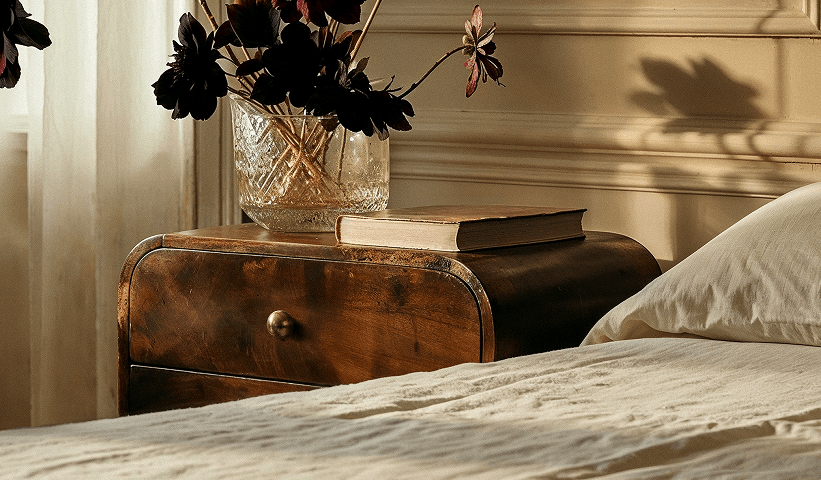
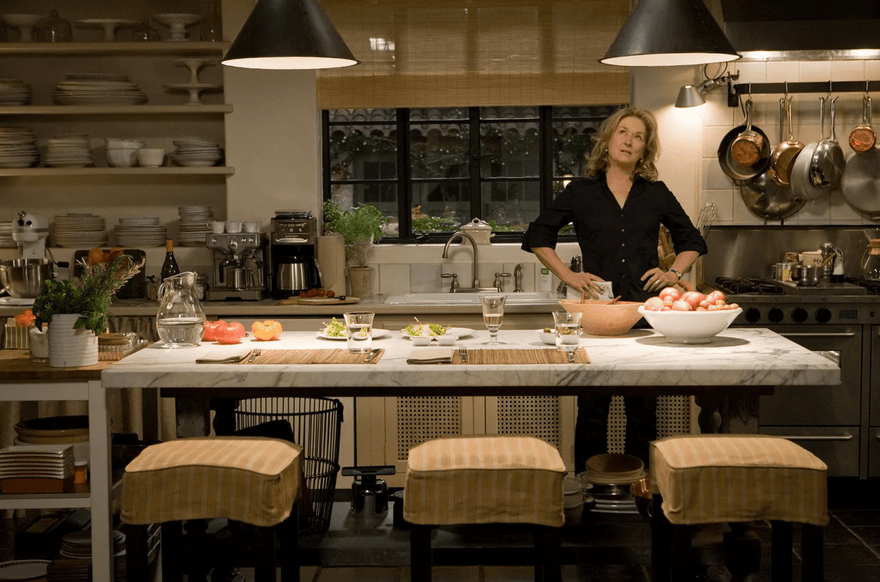
We tend to assume that people who have very little only need very little. What an assumption to make right? When designing for those with much less, anything more than the bare minimum is somehow giving them too much.
We think we're wise for not articulating it crudely, but it shows up in our actions. It just spills out when it comes to budgeting, material choices, or in these rooms with fluorescent lighting and furniture selected for its resistance to human attachment. For some reason, we're quick to justify beauty in our own lives, but when public money is involved, it becomes difficult to justify the same for others; that easily serviceable room is considered generous enough.
Miley Cyrus and her mother, Tish Cyrus-Purcell, have lately found themselves on the other side of that argument.
Miley and Tish Cyrus Commit to Beautiful Housing

At the Downtown Women's Center's Every Woman Housed gala on October 10, the Miley Cyrus Foundation announced a million-dollar commitment to the organization's HOME campaign, which is supporting the construction of 97 new apartments on Skid Row. Nearly six hundred people attended the gala hosted by Natasha Rothwell, helping to raise another $2.2 million.
Since 2024, Cyrus and Cyrus-Purcell have worked with the organization to redesign its Day Center and residential lobby, two spaces used regularly by women experiencing homelessness and survivors of domestic violence. Cyrus-Purcell, an interior designer herself, has spoken openly about the psychological importance of creating somewhere women can rest, recover, and feel at home. “I’ve always believed that home is our safe place and can have a powerful impact on how we feel," she says. "Helping design spaces at DWC where women can rest, heal, and look toward the future means so much to me. There’s nothing better than seeing those spaces come to life through the women who use them every day.”
Celebrity philanthropy generally operates at a safe distance from the actual conditions they claim to want to see improve. Where the Cyruses have their concerns rooted proves they're cut from a different cloth here.
In Los Angeles, where domestic beauty is basically a civic export, their behavior should be par for the course. The city has produced entire industries devoted to persuading people that their lives might improve with the right interiors and complementary furniture. But for some reason, it's been less enthusiastic about extending that conviction to those who can't Zelle you for it.
Los Angeles Once Built Public Housing Differently

In 1940, the Housing Authority of the City of Los Angeles commissioned a team of architects to design Pueblo del Rio, a housing development intended for workers in the city's growing defense industries. On that list was one of the forefathers of mid-century modern, Richard Neutra, and the first black architect certified west of the Mississippi, Paul R. Williams, two men whose contributions to Southern California visual interpretation extended far beyond what public agencies today could afford to commission. Williams was already designing residences for Hollywood's elite like Frank Sinatra and Lucille Ball, and would inevitably become one of the most celebrated architects in the country. Neutra helped define the visual language of California modernism. Both men worked alongside Gordon Kaufmann, Adrian Wilson, and Wurdeman & Becket. Sure, the project was just modest two-story buildings, but that didn't deter them from doing excellent work. The building featured carefully proportioned windows, shaded outdoor spaces, playgrounds, fruit trees and vegetable gardens, and all of this was managed while resources were scarce during wartime.
The finished work earned its place in historian Don Parson's exploration of the architectural movement he called community modernism. It describes an approach that regarded well-designed public housing as an expression of civic progress rather than charity. LA was hitting its stride here. You had Aliso Village in Boyle Heights designed by Ralph Flewelling and Lloyd Wright, combining light-filled residences with protected green spaces and facilities for kids. They aspired to build real community through beautiful design as an expression of civic and communal responsibility.
Unfortunately, the Cold War begins in '45, the housing controversies of the early fifties, and the Red Scare rhetoric helped transform the community investment model into a symbol of government overreach. Fast forward a few years and LA would eventually build Dodger Stadium on land once intended for the Elysian Park Heights, another public housing development. Given how easily LA can spend money on sports and entertainment spectacles, the location of Dodger Stadium is not without its own sense of irony.
Rosa's Place Brings Good Design Back to Skid Row
At 501 East Fifth Street, a former city-owned parking lot is becoming Rosa's Place, a seven-story supportive housing development designed by Gensler and KFA Architecture, alongside Daylight Community Development and GTM Holdings. When the building opens in 2027, it will increase the DWC's housing portfolio from 119 apartments to 216. Residents will be able to access gardens, laundry facilities, outdoor spaces, and the Center's network of employment, wellness, and supportive services.
Rosa's Place will join the decades of work the Skid Row Housing Trust has committed to reimagine the area through permanent supportive housing that challenged the visual expectations of low-income accommodation. One of its most celebrated projects, Michael Maltzan's Star Apartments, attracted international acclaim, including an appearance at the Venice Architecture Biennale. The building offered residents access to architecture ordinarily reserved for cultural institutions and universities. "How can the homeless become viewed as equal if their housing is not?" says the Trust. It beautifully challenges us to consider what we deem as appropriate for our fellow man, especially when they're in need.
Its community architect, Theresa Hwang, understood that thoughtful architecture could have positive effects on the people who live there as well as it can alter the perceptions of strangers passing by on the street. We would be shocked at how susceptible we are to social information expressed through a building's facade.
The Woman Who Inspired the Downtown Women's Center

The name Rosa's Place honors Rosa Arzola, who in 1975 was living on Skid Row with her entire life condensed down between two shopping carts. When outreach worker Jill Halverson met her, Arzola was maintaining a version of domestic life under conditions that were nothing but hostile to any form of progress. Halverson would begin visiting for coffee, and then a friendship was formed that inspired the opening of the Downtown Women's Center in 1978, at a time when efforts to house those without a home were overwhelmingly organized around men.
As Arzola's name will soon appear on this new building, the answers to what makes these apartments better suited to feel like homes draw from answers that weren't afforded to her when she lived in the same location. Privacy, safety, personal belongings not being displaced, and the ability to close the door are conditions through which a person begins to recover some form of authorship over their environment.
Cyrus-Purcell's work at the existing DWC amplifies the importance of these answers and the ways of thinking that value them. The design of a lobby or a communal room may appear peripheral beside the serious business of providing shelter to someone, but these spaces are the ones that shape the daily experience of a person within the confines of an institution. A room can either intimidate someone, quietly remind them of their current circumstances or the circumstances that brought them there, or it can welcome them home. Now this isn't to say good intentions and attractive architecture guarantee long-term success, but it's a much better first step than the alternatives thus far.
A Beautiful Home Is Only the Beginning

Wednesday, I didn't picture logging into Twitter and coming across Miley Cyrus in this LA story after the first scroll. Her celebrity locks in attention for a housing development that deserves it, while her mom's professional interests give the partnership an interesting dimension beyond fundraising. Still, the women who will eventually occupy Rosa's Place will have their own ideas about what belongs in a room. Their tastes may be eccentric, sentimental, corny, or completely at odds with whatever interior schemes Cyrus-Purcell and those involved prepared for them.
And I hope they are.
The most meaningful transformation of an apartment happens when whoever lives there begins making decisions for the space nobody else would have made. For all the cultural prestige attached to architects and interior designers, their finest work should consist of creating conditions in which someone else's life can take precedence over their intentions. What better complement for Cyrus-Purcell than to have her work give so much hope to the women through the beauty of the interiors that their confidence peaks, they become aware of their agency, and their inspired to express their own interpretation of home within the space?
Rosa Arzola spent years assembling those conditions for herself out of cardboard, shopping carts, and whatever else the streets spawned for her. Her successors will inherit something considerably more substantial and well-designed. Now, LA has once again demonstrated that it knows how to make beautiful spaces for people with very little. Let's just hope it doesn't need so much persuading next time.
This story examines the relationship between architecture, dignity, and access to thoughtful design through the work of the Downtown Women's Center, the Miley Cyrus Foundation, and the architectural history of Los Angeles. Residence Supply does not own, nor does it claim ownership of, any third-party images featured in this article. All images remain the intellectual property of their respective photographers, creators, organizations, and copyright holders and are included for editorial reference and commentary.